

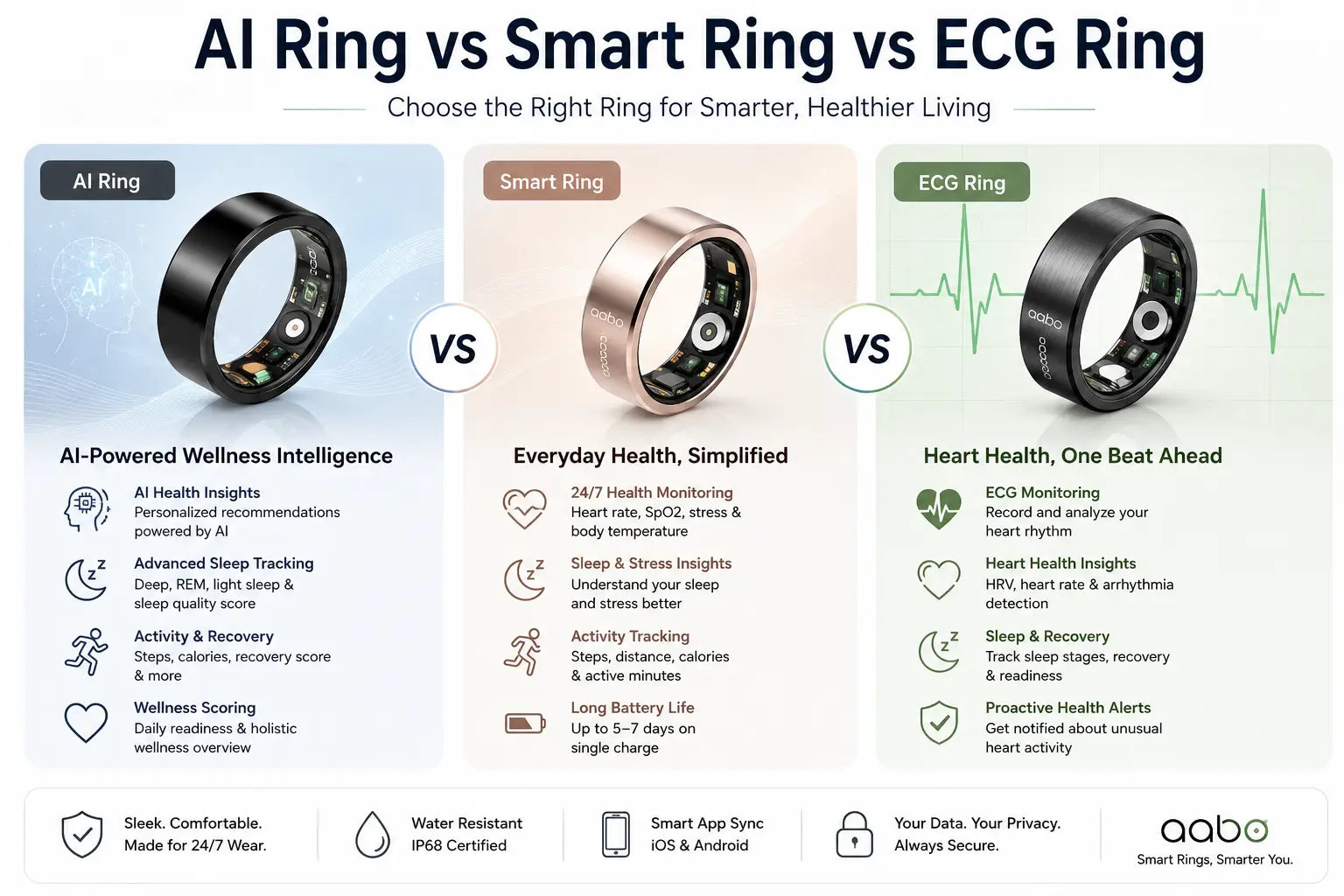
Here is a brief overview to help you choose the best ring technology and understand the differences between AI rings, ECG rings, and smart rings—addressing the common confusion people face today when deciding which one to buy.
Wearable technology has evolved rapidly over the last few years, making health monitoring easier and more convenient than ever before. While smartwatches have dominated the wearable market for a long time, smart rings are quickly becoming a popular alternative due to their compact size, comfort, and advanced health-tracking capabilities. Today, consumers can choose from various types of rings, including AI Rings, ECG Rings, and Smart Rings. Each of these devices serves a unique purpose and offers different features to help users monitor their health and wellness.
In this guide, we will explore the differences between AI Rings, ECG Rings, and Smart Rings, their benefits, key features, and how to choose the right ring technology for your lifestyle.
AI Rings (Wellness & Lifestyle)

AI Rings represent the next generation of wearable technology. These rings use Artificial Intelligence (AI) to analyze health data and provide personalized insights about your overall well-being. Instead of simply collecting information, AI Rings process the data and generate recommendations that can help improve your lifestyle.
AI Rings typically monitor:
- Heart rate
- Sleep quality
- Stress levels
- Physical activity
- Body temperature
- Recovery and readiness scores
The major advantage of AI Rings is their ability to convert raw health data into meaningful insights. For example, an AI Ring may detect poor sleep patterns and suggest adjustments to your bedtime routine. It can also identify signs of stress and recommend relaxation techniques.
These rings are particularly suitable for individuals who want a proactive approach to wellness and lifestyle management. Fitness enthusiasts, professionals, and health-conscious users often prefer AI Rings because of their intelligent analytics and personalized guidance.
ECG Rings (Clinical Heart Tracking)

ECG Rings are designed primarily for monitoring heart health. ECG stands for Electrocardiogram, a medical test that records the electrical activity of the heart. Unlike standard heart rate monitoring, ECG technology can provide more detailed information about cardiac rhythm and potential irregularities.
An ECG Ring can help users:
- Monitor heart rhythm
- Detect irregular heartbeats
- Track heart rate variability
- Identify possible signs of arrhythmia
- Maintain heart health records
These rings are especially beneficial for individuals with heart-related concerns or those who want more advanced cardiovascular monitoring. Some ECG Rings can generate ECG reports that can be shared with healthcare professionals for further evaluation.
While ECG Rings are excellent for heart monitoring, they generally focus less on broader wellness metrics compared to AI Rings. Their primary purpose is clinical-grade cardiac tracking rather than lifestyle analysis.
Smart Rings Track Basic Wellness and Sleep

Smart Rings are the foundation of wearable ring technology. They focus on essential health and activity tracking features without the advanced AI capabilities or specialized ECG functionality.
Most Smart Rings can monitor:
- Daily activity levels
- Step count
- Calories burned
- Sleep duration
- Resting heart rate
- Basic wellness metrics
The biggest advantage of Smart Rings is their simplicity. They are lightweight, comfortable, and often have longer battery life than larger wearable devices. Users who want basic health monitoring without complex reports or medical-grade tracking often find Smart Rings to be an ideal choice.
For many people, a Smart Ring provides enough information to maintain healthy habits and monitor overall wellness without overwhelming them with detailed analytics.
What Are AI Rings, ECG Rings, and Smart Rings?
Although all three devices belong to the wearable technology category, they differ significantly in their purpose and functionality.
AI Rings
AI Rings focus on wellness optimization using artificial intelligence. They collect health data and generate personalized recommendations to improve sleep, fitness, recovery, and daily performance.
ECG Rings
ECG Rings focus primarily on heart health. Their advanced sensors record electrical signals from the heart and help users monitor cardiac activity more accurately.
Smart Rings
Smart Rings provide basic health tracking features such as sleep monitoring, activity tracking, and heart rate measurement. They are designed for everyday wellness monitoring.
Each ring type addresses different user needs, making it important to understand your health goals before making a purchase decision.
Key Features and Differences Between Each Ring Type
The following comparison highlights the major differences between AI Rings, ECG Rings, and Smart Rings.
AI Ring Features
- AI-powered health insights
- Personalized wellness recommendations
- Advanced sleep analysis
- Stress monitoring
- Recovery tracking
- Fitness optimization
ECG Ring Features
- ECG recording capability
- Heart rhythm monitoring
- Arrhythmia detection support
- Detailed cardiovascular insights
- Medical-grade heart data
Smart Ring Features
- Activity tracking
- Sleep monitoring
- Heart rate measurement
- Daily wellness tracking
- Lightweight and comfortable design
Main Difference
The primary difference lies in the purpose of the device:
- AI Rings focus on intelligent wellness insights.
- ECG Rings focus on clinical heart monitoring.
- Smart Rings focus on general health and activity tracking.
Understanding these differences helps users select the device that best aligns with their health objectives.
How These Smart Wearables Help Monitor Your Health
Smart wearable rings provide continuous monitoring throughout the day and night. Unlike traditional health assessments that occur occasionally, these devices offer ongoing insights into your body's condition.
Sleep Monitoring
Poor sleep can affect physical health, mental performance, and overall well-being. Smart Rings, AI Rings, and many ECG Rings track sleep duration and quality, helping users understand their sleeping habits.
Heart Health Tracking
Monitoring heart activity is essential for maintaining cardiovascular health. ECG Rings provide the most advanced heart monitoring capabilities, while AI Rings and Smart Rings typically track heart rate and heart rate variability.
Stress Management
AI Rings can identify physiological signs of stress by analyzing heart rate variability, sleep patterns, and activity levels. They then provide suggestions to help users manage stress more effectively.
Fitness Tracking
These rings track physical activity, exercise intensity, calorie expenditure, and recovery. This information can help users improve workout performance and maintain an active lifestyle.
Health Awareness
One of the greatest benefits of wearable technology is increased awareness. Users gain a better understanding of their health patterns, allowing them to make informed decisions about their lifestyle and wellness habits.
Benefits for Fitness, Sleep Tracking, and Daily Wellness
Wearable rings offer numerous benefits for people seeking a healthier lifestyle.
Improved Sleep Quality
By tracking sleep stages and patterns, users can identify habits that may negatively affect sleep and make necessary adjustments.
Better Fitness Performance
Activity tracking helps users monitor progress toward fitness goals and maintain motivation.
Stress Reduction
AI-driven insights can help users recognize stress triggers and adopt healthier coping strategies.
Convenience and Comfort
Unlike larger wearables, rings are compact and comfortable enough to wear throughout the day and night.
Continuous Monitoring
Health data is collected continuously, providing a more complete picture of wellness compared to occasional measurements.
Personalized Health Insights
AI Rings go beyond tracking by delivering customized recommendations that support better health outcomes.
Which Ring Is the Best Choice for Your Lifestyle and Needs?
Choosing the right ring depends on your personal goals and health priorities.
Choose an AI Ring If:
- You want personalized wellness recommendations.
- You are focused on fitness, recovery, and performance.
- You value AI-driven health insights.
- You want comprehensive lifestyle monitoring.
Choose an ECG Ring If:
- You are concerned about heart health.
- You need advanced cardiac monitoring.
- You want ECG recording capabilities.
- You wish to track heart rhythm more accurately.
Choose a Smart Ring If:
- You need basic health tracking.
- You want a simple and affordable wearable.
- You primarily track sleep and daily activity.
- You prefer ease of use and long battery life.
Also Read This - Significant Advantages of Fitness Tracker Rings in India
Conclusion
Smart ring technology has transformed personal health monitoring by making advanced tracking accessible in a small and comfortable form factor. Whether you choose an AI Ring, an ECG Ring, or a Smart Ring, each device offers unique advantages based on your specific needs.
AI Rings are ideal for users seeking intelligent wellness insights and lifestyle optimization. ECG Rings are best suited for individuals who prioritize heart health and clinical-grade monitoring. Smart Rings provide an excellent balance of simplicity, comfort, and everyday wellness tracking.
Before making a decision, consider your health goals, lifestyle, and the type of data you value most. By selecting the right ring technology, you can gain valuable insights into your health and take meaningful steps toward a healthier and more informed future.
Share:
Best Continuous Glucose Monitor Without Finger Pricks in 2026 – LinXCGM Explained
Do Smart Rings Really Work? What Everyday Users Are Saying