

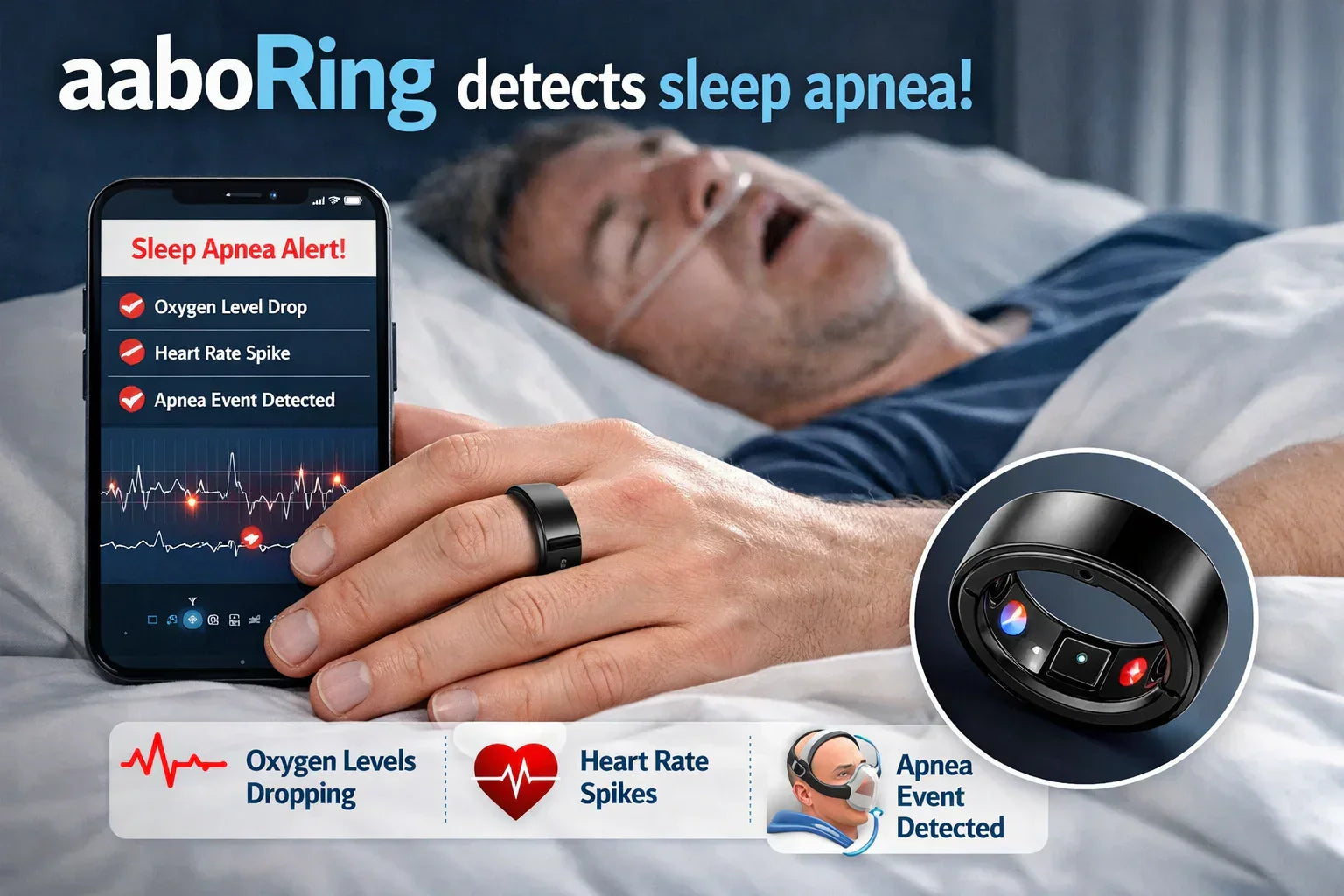
If you know then the sleep that we have in our daily routine is such that it refreshes our mind, the work of sleep is that it freshens you, relaxes your body and reduces your stress, due to this you can work well during the day. You remain active, if you do not get complete sleep and you are going to office, doing household work, then in such a situation you start getting stressed, if you are not able to sleep.
If you're not sleeping well, it could be about your sleep apnea. Therefore, a smart ring has been created to address these issues. By 2026, you'll be able to track your sleep after wearing it. So, if you care about your health, you should definitely consider this ring.
1. What Is Sleep Apnea (And Why It’s Often Missed)?
Sleep apnea is a disease in which we do not get complete sleep at night. While sleeping, our breathing stops in between. Sometimes it happens that while sleeping, breathing stops for 2 seconds due to which a person can even lose his life. If you know, then due to sleep apnea, health also gets affected. Due to lack of sleep, there can be a lot of effects on health in the future.
The reason sleep apnea is often missed is simple: most people don’t remember waking up during the night. Even if the body wakes briefly to restart breathing, the brain may not register it as a full awakening. Instead, the person just wakes up in the morning feeling tired, assuming they “slept enough.”
Common symptoms of sleep apnea include:
-
Loud snoring
-
Gasping or choking during sleep
-
Waking up with a dry mouth
-
Morning headaches
-
Fatigue during the day
-
Trouble concentrating
-
Mood swings and irritability
2. Why Sleep Apnea Makes You Feel Exhausted Every Day
Sleep apnea doesn’t just reduce how long you sleep it destroys the quality of your sleep. Even if you’re in bed for 7–8 hours, your body may never reach the deep, restorative stages it needs. Here’s why you feel exhausted every single day:
a. Your Breathing Stops Repeatedly
In obstructive sleep apnea, your airway collapses or becomes blocked while you sleep. This can happen dozens or even hundreds of times a night. Each time breathing stops, your brain senses danger and partially wakes you up to restart breathing.
You may not remember these awakenings but your body does.
b.You Never Reach Deep, Restorative Sleep
Your body cycles through:
-
Light sleep
-
Deep sleep (physical repair)
-
REM sleep (memory, mood regulation, brain recovery)
Sleep apnea keeps pushing you back into lighter sleep. That means:
-
Muscles don’t fully recover
-
Hormones (like growth hormone) aren’t properly regulated
-
Brain detox and memory consolidation are disrupted
That’s why people with sleep apnea often feel:
-
Heavy tiredness even after full sleep
-
Brain fog during work hours
-
Low energy throughout the day
-
Increased cravings for sugar and caffeine
-
Poor mood and anxiety
Over time, untreated sleep apnea can contribute to serious health issues such as high blood pressure, heart disease, irregular heartbeat, and even stroke risk. That’s why identifying it early is so important.
3. Sleep Labs Are Helpful, But Not Always Convenient
Seep labs are extremely helpful for diagnosing sleep disorders like sleep apnea because they provide detailed information about breathing patterns, oxygen levels, brain activity, and heart rate during sleep
Why Sleep Studies Aren’t Always Easy
-
Costly: Sleep studies can be expensive, especially without insurance coverage.
-
Limited availability: Many sleep labs have long waiting times.
-
Uncomfortable experience: Sleeping in a lab with wires and sensors can feel unnatural.
-
One-night limitation: A single night might not represent your typical sleep.
-
Time-consuming: People often delay getting tested because of work schedules or travel difficulties.
Many individuals who suspect sleep apnea simply never get tested because the process feels too complicated.
This is where wearable health technology, like smart rings, becomes valuable. Smart rings offer a convenient alternative for tracking sleep patterns at home over multiple nights, providing insights that can guide users toward professional help if needed.
4. Can a Smart Ring Really Detect Sleep Apnea?
Think of it like this: a smart ring doesn’t replace a doctor, but it can act as an early warning system.
Many modern smart rings use advanced sensors and AI-based algorithms to detect irregular breathing signals, oxygen drops, and sleep disturbances. When these patterns repeat over multiple nights, the ring may classify the user as having a higher risk of sleep apnea.
This is especially helpful because many people don’t realize they have sleep apnea until it becomes severe. Smart rings make it possible to notice early signs before the condition worsens.
Some advanced smart rings, such as Ring Conn Gen 2 and similar models, provide dedicated sleep apnea monitoring features that run for multiple nights and generate a sleep apnea risk report.
This makes smart rings a major game-changer for people who want insights before visiting a sleep specialist.
5. What a Smart Ring Tracks to Identify Sleep Apnea Patterns
Smart rings are compact wearable devices that continuously monitor key body signals during sleep. While they do not directly diagnose sleep apnea like a lab study, they can detect patterns that suggest possible breathing disturbances. Here’s what a smart ring typically tracks:
Here are the key data points smart rings track to detect sleep apnea risk:
1. Blood Oxygen Saturation (SpO₂)
One of the strongest signs of sleep apnea is a drop in blood oxygen levels. When breathing stops, oxygen levels fall. If this happens repeatedly, it creates a pattern that smart rings can detect.
A healthy SpO₂ level usually stays above 95%. Sleep apnea can cause repeated dips below that.
2. Respiratory Rate
Smart rings estimate breathing rate by analyzing motion and heart signals. Abnormal respiratory patterns, irregular breathing, or sudden pauses can indicate breathing disturbances.
3. Heart Rate and HRV
Sleep apnea often triggers sudden heart rate spikes during the night due to stress response. HRV (Heart Rate Variability) can also be affected, showing signs of poor recovery and high stress load.
4. Sleep Stages
Smart rings track sleep stages like light sleep, deep sleep, and REM sleep. People with sleep apnea often experience less deep sleep because the body keeps waking up.
5. Body Temperature Changes
Temperature tracking helps identify overall sleep stability and recovery. Some smart rings use temperature variation to detect potential illness or stress, which may also affect breathing.
6. Movement and Sleep Disturbances
Sleep apnea can cause restlessness. Smart rings track micro-movements, tossing, and turning, which may indicate interrupted sleep.
How AI Brings It All Together
An AI ring synthesizes multiple health signals to provide clear, actionable insights regarding sleep. Rather than merely displaying raw data, it combines metrics such as oxygen levels, heart rate, and sleep stages to track trends over time. If oxygen levels repeatedly drop, heart rate spikes, and sleep is disrupted, the AI ring can signal potential patterns indicative of sleep apnea. This makes it a powerful screening tool for early awareness.
This multi-data tracking is what makes smart rings effective for sleep apnea risk detection.
Also read this - AI-Driven Smart Rings: Innovation and Trends in 2026
6. Why Sleep Apnea Monitoring Takes Three Consecutive Nights
Sleep apnea can vary from night to night, which is why monitoring is often recommended for three consecutive nights. Here are the key reasons:
1. Night-to-Night Variations
Sleep patterns naturally change due to stress, fatigue, alcohol intake, nasal congestion, or daily routine. One single night may not reflect your typical sleep.
2. Body Position Differences
Sleep apnea is often worse when sleeping on the back. If you sleep on your side during one test night, the severity may appear lower than it actually is.
3. The “First-Night Effect”
When using a monitoring device for the first time, many people sleep differently — lighter or more restlessly. This can affect the accuracy of results.
4. Oxygen and Heart Rate Fluctuations
Breathing interruptions, oxygen drops, and heart rate spikes can vary. Multiple nights help identify consistent patterns rather than isolated events.
5. More Reliable Average Data
Three nights provide a broader data set, giving a clearer and more dependable picture of your real sleep behavior.
In summary: Monitoring for three consecutive nights increases accuracy, reduces false readings, and helps detect true sleep apnea patterns more effectively.
7. Sleep Tracking vs Sleep Apnea Detection: What’s the Difference?
Sleep tracking and sleep apnea detection may sound similar, but they serve very different purposes. Understanding the difference can help you know whether you’re simply monitoring sleep habits or screening for a medical condition.
1. Purpose
Sleep Tracking focuses on overall sleep quality and patterns. It helps you understand how long you sleep, how often you wake up, and how much time you spend in light, deep, or REM sleep.
Sleep Apnea Detection looks specifically for signs of breathing interruptions during sleep a medical condition that can affect oxygen levels and heart health.
2. What Is Measured
Sleep Tracking Devices (like smart rings or watches) usually monitor:
- Movement
- Heart rate
- Heart rate variability (HRV)
- Estimated sleep stages
- Sometimes blood oxygen levels
They provide wellness insights but do not officially diagnose disorders.
Sleep Apnea Testing (like home tests or lab studies) measures:
- Breathing pauses
- Airflow
- Oxygen desaturation events
- Respiratory effort
- Apnea-Hypopnea Index (AHI)
This data is used for clinical diagnosis.
3. Level of Accuracy
Sleep trackers estimate sleep using algorithms based on motion and pulse signals. They are helpful for trends but may not detect complex breathing disorders accurately.
8. What Happens After the Smart Ring Detects a Risk?
When a smart ring detects patterns that suggest a possible sleep apnea risk, it does not immediately diagnose you. Instead, it flags unusual trends and prompts the next steps. Here’s what typically happens:
1. Risk Alert Notification
The ring’s app may send a notification indicating repeated oxygen drops, abnormal heart rate spikes, or irregular breathing patterns over multiple nights.
2. Trend Analysis
The device reviews data collected across several nights to confirm the pattern. One unusual night usually does not trigger a serious alert consistent irregularities do.
3. Detailed Sleep Report
You may receive a summary report showing:
- Oxygen level fluctuations
- Restless sleep patterns
- Elevated nighttime heart rate
- Reduced deep sleep
This report helps you understand why the risk was flagged.
4. Recommendation to Seek Medical Evaluation
Most smart rings clearly state that they are not diagnostic tools. If risk is detected, the app typically recommends consulting a doctor or sleep specialist for further evaluation.
9. Your Sleep Deserves Better: Smarter Tracking, Better Health
Your sleep is not just about how many hours you spend in bed it’s about how well your body recovers, repairs, and recharges. When sleep is constantly interrupted by stress, irregular breathing, or poor sleep quality, your overall health begins to suffer.
Smarter sleep tracking gives you deeper insights into what’s really happening at night. By monitoring metrics like oxygen levels, heart rate patterns, movement, and sleep stages, modern wearable technology can reveal hidden patterns that traditional guesswork often misses. Instead of waking up tired and wondering why, you gain data-driven clarity.
Better tracking leads to better decisions whether it’s improving sleep habits, adjusting routines, or seeking medical evaluation when needed. Early awareness can prevent long-term health risks and restore your energy, focus, and mood.
Because quality sleep isn’t a luxury it’s the foundation of better health.
Frequently Asked Questions (FAQ)
Q: Can a smart ring detect sleep apnea?
A smart ring cannot officially diagnose sleep apnea but it can detect patterns that may indicate risk.
Q: How do I wear the Ring Conn Gen 2 for the best results?
For the best accuracy, wear the ring snugly on your index finger. It should feel comfortable but not loose. Make sure the sensors are in full contact with your skin. Wearing it consistently overnight improves tracking reliability.
Q: How is smart ring monitoring different from a sleep study?
A smart ring monitors general sleep trends like heart rate, oxygen levels, and movement to identify possible risk patterns. It provides wellness insights but does not diagnose medical conditions.
Q: Do I need a subscription to use the sleep apnea feature?
Often yes many smart ring apps require a premium (paid) subscription to unlock advanced health features, including sleep apnea risk insights or detailed sleep reports
Q: How long does the smart ring battery last?
The battery life of a smart ring typically depends on the model and how you use it, but most smart rings are designed to last about 3 to 7 days on a single charge under normal usage conditions. Some newer or more power-efficient models may last even longer, especially if they offer advanced battery optimization features.
Click here - How to Charge Your Aabo Smart Health Ring Easily
Share:
How Are Smart Rings Powered? Technology, Features & Future of Smart Rings in 2026
What Is a CGM Device and How Does It Work?