

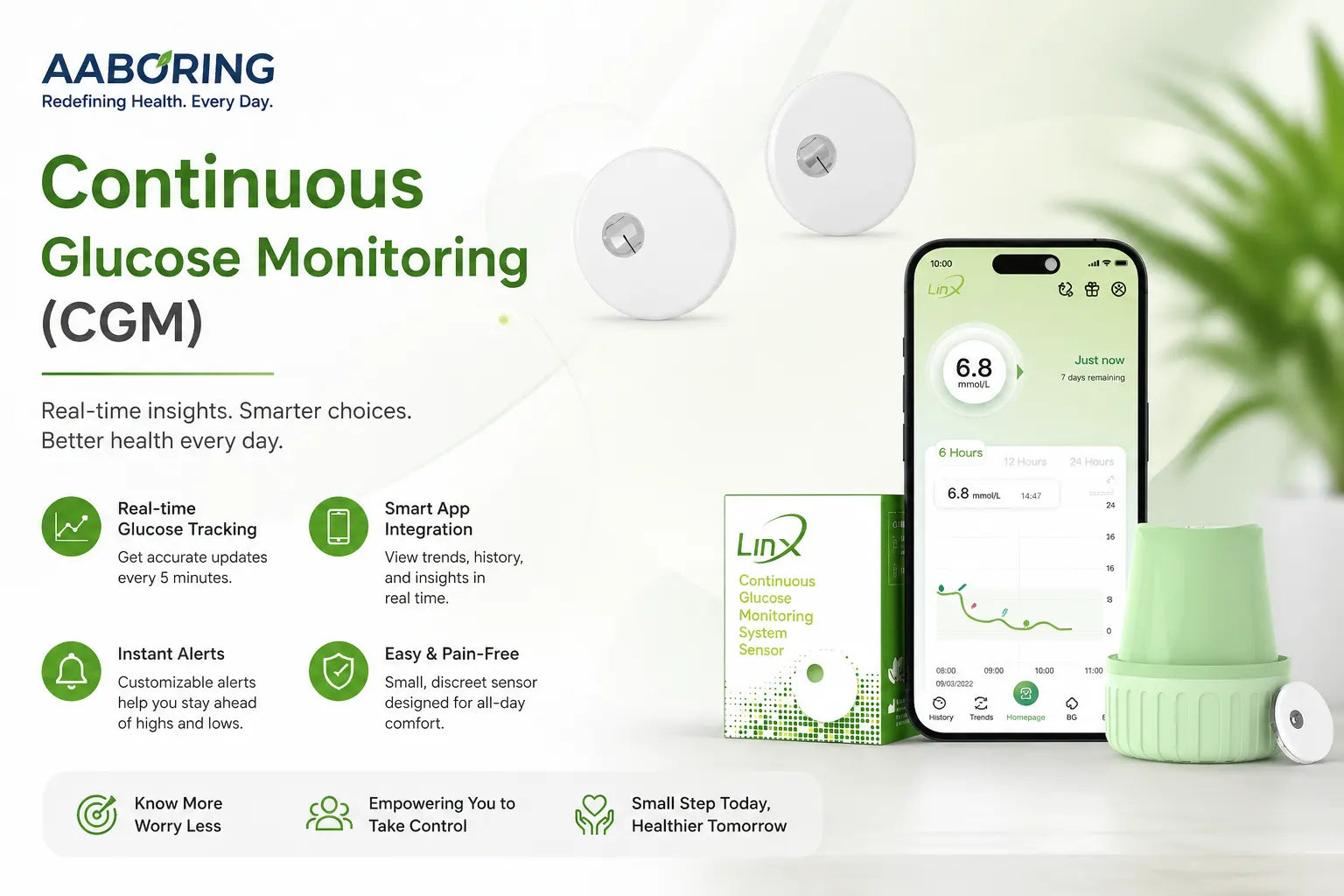
Over the past few years, managing diabetes has changed quite a bit, mostly because of new health tech coming into the picture. One of the biggest improvements is the Continuous Glucose Monitoring (CGM) device. It’s basically changed how people keep track of their blood sugar.
Earlier, people had to rely on finger-prick tests a few times a day. That still works, of course, but CGMs give you real-time updates, which makes things a lot easier and more accurate. You’re not just seeing one reading, you're seeing the whole trend.
This guide walks through what CGM devices are, how they actually work, and why more and more people are starting to use them.
What Is a LinX CGM Device?
A CGM (Continuous Glucose Monitoring device) is a small wearable gadget that tracks your glucose levels throughout the day and night. You don’t have to keep testing manually all the time.
You might have heard people mention newer options like the LinX CGM device. That’s just one of the newer, more advanced versions that comes with smarter features and smoother tracking.
Most CGMs have three main parts:
- A sensor that sits just under your skin
- A transmitter that sends the data
- A receiver or mobile app where you actually see the readings
Devices like LinX are designed to make things more seamless. They send data straight to your phone, give alerts, and kind of do the thinking for you in the background. Also, way fewer finger pricks, which is a big relief for most people.
Smart Continuous Glucose Monitoring Basics
To really get why CGMs are useful, it helps to understand how they measure glucose.
Interestingly, they don’t measure blood directly. Instead, they check glucose levels in the fluid between your cells (called interstitial fluid). It sounds complicated, but it works pretty well.
Here’s what makes them “smart”:
- They update readings every few minutes (sometimes as fast as every 1 to 5 minutes)
- They show trends like whether your sugar is going up, down, or staying steady
- You get alerts if levels go too high or too low
- They connect with apps and even smartwatches
So instead of guessing how your body is reacting, you can actually see it happening in real time.
How a Smart Continuous Blood Glucose Monitor Works
The process is actually simpler than it sounds:
1. Sensor insertion
A tiny sensor is placed under your skin, usually on your arm or stomach.
2. Glucose detection
It measures glucose levels using a small chemical reaction (enzyme-based, but you don’t really notice it).
3. Data transmission
The transmitter sends the info wirelessly to your phone or a device.
4. Data display
You’ll see numbers, graphs, and patterns on your screen.
5. Alerts and insights
If something’s off, you’ll get notified right away.
This cycle keeps going all the time even when you’re asleep which is honestly one of the biggest advantages.
CGM Monitor vs Glucose Monitor
People often wonder how CGMs are different from regular glucose monitors.
Traditional glucose monitors:
- Require finger pricks
- Give one reading at a time
- No trend data
- You have to log everything yourself
CGM devices:
- Monitor continuously, 24/7
- Show patterns and trends
- Automatically track data
- Send alerts when needed
Traditional devices are still useful, especially in some situations, but CGMs give you a much bigger picture.
Also Read This- AI-Driven Smart Rings: Innovation and Trends in 2026
Benefits of Continuous Glucose Monitoring Devices
There’s a reason CGMs are becoming more popular.
1. Better control
You can keep your glucose levels more stable since you’re always aware of changes.
2. Fewer finger pricks
Some people almost completely stop needing them.
3. Real-time alerts
This can help prevent serious issues like low blood sugar episodes.
4. Smarter lifestyle choices
You start noticing how food, exercise, or even stress affects you.
5. Helpful data for doctors
Instead of guessing, doctors can look at detailed reports and adjust treatment properly.
How to Apply a Smart Glucose Monitor Patch
Using a CGM is pretty straightforward once you’ve done it once or twice.
Basic steps:
- Pick a spot (upper arm or abdomen usually works best)
- Clean the area with alcohol
- Use the applicator to insert the sensor
- Attach the transmitter
- Connect it to your phone or device
- Wait for it to start working (some need a short warm-up time)
Most sensors stay on for about 7 to 14 days, depending on the model.
What Can a Blood Sugar Monitor Patch Be Used For?
These patches aren’t just for people with diabetes.
They’re commonly used for:
- Type 1 and Type 2 diabetes
- Pre-diabetes monitoring
- Gestational diabetes
- Fitness tracking and metabolic health
- Understanding how different foods affect your body
Even people without diabetes sometimes use CGMs just to learn more about their health.
Features to Look for in a Good CGM Device

If you’re thinking about getting one, here are a few things that matter:
- Accuracy obviously important
- Real-time updates
- Mobile app support
- Custom alerts
- Long sensor life
- Water resistance
- Data sharing options
- Minimal calibration needed
Not every device has everything, so it depends on what you need.
What the Future Looks Like
CGM tech is still improving, and pretty fast too. CGM technology is evolving quickly, and the changes ahead are focused on making life simpler for users. In the near future, we may see non-invasive sensors that don’t need to go under the skin, making monitoring more comfortable. Advances in AI could help predict glucose changes before they happen, allowing people to take action earlier. Better integration with insulin pumps may also lead to automatic adjustments, reducing the need for constant manual input. At the same time, devices are becoming smaller, more discreet, and easier to use, moving toward a more seamless and stress-free diabetes management experience.
Some things that might become common soon:
- Sensors that don’t need to go under the skin
- AI-based predictions (like warning you before levels change)
- Integration with insulin pumps for automatic adjustments
- Smaller, less noticeable devices
It’s all moving toward making things easier and more automatic.
Final Thoughts
CGM devices have really changed how people manage blood sugar. Instead of reacting after something happens, you can actually stay ahead of it. Whether you’ve just been diagnosed, have been managing diabetes for years, or are just curious about your health, a CGM can give you a lot of useful insight.
At the end of the day, it’s not just about numbers. It’s about feeling more in control and a bit more confident in day-to-day life which honestly makes a big difference.
Share:
Can a Smart Ring Detect Sleep Apnea? Here’s How It Works and Why It’s a Game-Changer
Smart Guide to Selecting the Best CGM Device in 2026